
 Consultation Phone:
0755-82328526
Consultation Phone:
0755-82328526
Consultation Phone:
0755-82328526
Consultation Phone:
0755-82328526


— Industrial Module —
 Customer Service Phone0755-82328526
Email: gdguoyuan888@vip.163.com
Address: 深圳市罗湖区深南东路5002号信兴广场地王商业中心商业大楼4011
Agarwood DP
Author: Admin Source: 华夏香都 Publish Time: 2021-06-01 Views: 669
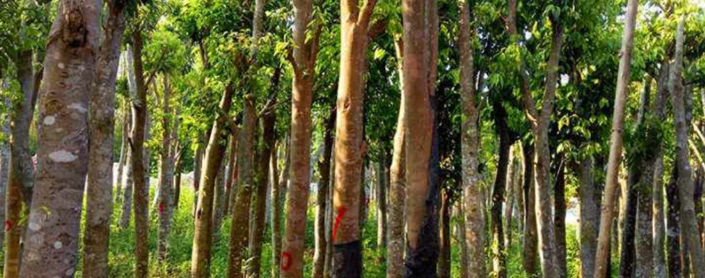
With the support of research institutions, the assistance of incubation centers, cultural backgrounds, and the influx of people brought by the tourism industry, we will introduce mature deep processing enterprises and use the cultural and geographical advantages of Dongfang Xiangdu to help them develop; Or introduce units or individuals with certain conditions to incubate small and medium-sized agarwood deep processing enterprises. Enhance the value of agarwood and expand its application space. And it will also plan supporting international agarwood trading centers and logistics parks to facilitate product trading and circulation! At present, the deeply processed products of fragrance include: perfume, Chinese medicine, facial mask, shampoo, wine, car fragrance, incense, incense, essential oil for aromatherapy, fragrance machine, etc. Every product has a huge market space.
Increasing land income and value, revitalizing rural areas, boosting employment, poverty alleviation and wealth creation, with an output value exceeding one trillion yuan. In terms of cultivation, agarwood used to take decades or even centuries to harvest, but now our new technology and varieties can be harvested in just 3-5 years, which is more than 10 times more economically valuable than ordinary crops.
【 Whole body is treasure 】 Activate the use value of agarwood
In recent years, in order to save the endangered agarwood (agarwood tree) and promote the emergence of a new agarwood industry, the artificial fragrance forming technology of "fragrant gland plant cell activation method" has been developed, which allows agarwood to be fully connected into fragrance in a short period of time.
This technology not only improves the yield and quality of agarwood, but also allows the remaining leaves and roots to utilize their residual heat even if the trunk and branches are cut down to extract agarwood. It can be said that this technology has broken through the bottleneck of difficulty in obtaining large quantities of agarwood in the past, providing a foundation for the downstream development of the agarwood industry.
Agarwood was widely used in ancient times, such as before the Han Dynasty when incense was mainly used for soup and ritual purposes. However, during the prosperous period of the Qing Dynasty, agarwood became more deeply integrated into daily life, with stoves, bottles, boxes, study tables arranged in groups of three, as well as incense tables and tables becoming typical furnishings for literary and recreational purposes. But with the changes of the times, agarwood has become more and more used for worship, and other purposes have been neglected. Other parts of agarwood have also been wasted for a time.
Traditionally, people have believed that only the fragrant part is the most useful. In fact, agarwood plants have many uses, including processing and utilization in daily life, religion, etiquette, and medicine. Leaves can be used to make tea and even pillows; Flowers can be used as spices, seeds can be pressed for oil, bark can be used for papermaking, wood can be used as ordinary materials or crushed as raw materials for burning fragrance, and it can also be used as "soil" for cultivating healthy mushroom plants. And the roots of the soil agarwood that have undergone "activation" can now enter ordinary people's homes and become bonsai.
And agarwood shavings can be compressed into aromatherapy tablets, which can improve the living environment and have a good therapeutic effect on respiratory diseases, heart disease, and angina. At the same time, it can also make high-grade perfume, soap, essence and cosmetics.
Agarwood Banquet: Transitioning from "Industry" to "Culture"
In addition to tangible products such as aromatherapy tablets and essence, agarwood industry can also be deepened and extended in the direction of fragrance culture. It is understood that incense culture has a long history in China, starting from the pre Qin period, growing up in the Han dynasty, and flourishing in the Song and Ming dynasties. Many literati and refined guests had a hobby of smoking incense to satisfy their emotions. However, in the late Qing dynasty, due to wars, it greatly affected the development of spice trade and the incense making industry, and people gradually lost this leisurely elegance. As a result, incense culture entered a period of discontinuity.
During this year's "Two Sessions" in Zhongshan, Huang Zhongbin, Vice President of the Zhongshan Agarwood Association, submitted a proposal to include the development of the agarwood industry in Zhongshan's economic upgrading and transformation project. He hopes that the government will include the development of the agarwood industry in Zhongshan's economic upgrading project, increase support for agarwood seedling cultivation, planting, and research on agarwood fruiting technology, cultivate the formation of agarwood distribution and trade markets, and restore Zhongshan's position in the agarwood industry chain. Restoring and excavating the cultivation of agarwood, promoting the technology of manual harvesting of agarwood, and making it a new industry that combines forestry, medicine, light industry, tourism, and Xiangshan culture, not only saves endangered species of national second-class protected plants, but also provides the best opportunity for the traditional agarwood industry to move towards a new industry in the current urgent need for economic transformation and upgrading.
It is understood that in order to promote the development of agarwood industry and the popularization of agarwood culture, Zhongshan Agarwood Association has developed the "agarwood banquet", including agarwood ginseng wine, wild agarwood narcissus tea, wild agarwood chicken, etc.
The natural setting of agarwood: The trunk of agarwood is damaged by insects, ants, or natural injuries, which stimulates the secretion of resin in the body of the agarwood tree, thus infiltrating into local branches. Due to the long-term deposition of these secretions in the wood and their natural formation over many years, they aggregate into the traditional Chinese medicine "agarwood". The longer the age, the better the quality. Agarwood is a traditional precious Chinese medicinal herb and a premium natural spice in China. The main functions of medicinal agarwood are to promote qi circulation, relieve pain, warm the middle and stop vomiting, and absorb qi to relieve asthma.
However, value commodities are always in short supply, and domestic wild agarwood and imported agarwood can no longer meet the needs of the domestic market in the pre economic era. Therefore, many people have seized this trend and devoted themselves to artificial agarwood cultivation. However, many technical issues have become bottlenecks. In addition to cultivation and cultivation, how to harvest and process artificial agarwood is also a pressing issue.The planting time of agarwood is mostly in March and April of spring, when the survival rate is higher. Before planting, dig a pit with a length and width of 50 centimeters and a depth of 40 centimeters, and fill the bottom of the pit with some outer soil. Then insert the seedlings upright into it, fill the soil layer by layer, and water them thoroughly. Watering should be sufficient in daily life, and the air should be kept moist. Fertilization does not need to be too much, just four times a year. Also, pay attention to trimming the lateral branches and regularly weeding.
1. Planting season: During the spring months of March and April, when the temperature rises and the spring shoots have not yet sprouted or have just sprouted, choose to plant on rainy days. The survival rate can reach over 95%. If bagged seedlings or nutrient bowl seedlings are selected, the planting season is relatively loose and the planting effect is better.
2. Planting density: Afforestation density cannot be generalized and depends on site conditions. In areas with good water and fertilizer conditions, it is 1.2M × 1.3M (generally with a tree spacing of 1-2 meters), with about 300-500 plants planted per acre.
3. Nurturing young trees: After planting, loosen the soil and hoe twice at the end of the rainy season that year. Within the next three years, efforts should be made to strengthen the management of soil care, including weed removal, weeding, loosening, and hole expansion. Nurture twice a year, once before and once after the rainy season. Fertilization: When combining soil loosening, weeding, and hole expansion, fertilize twice a year during the rainy season, with 100-150g of compound fertilizer per plant each time, to promote forest growth, early closure into a forest, and reduce weed growth.
When nurturing, it is important to prune the branches once a year to cultivate excellent stem shape, which is beneficial for producing fragrance. However, it should be noted that in the first year of a young forest, do not prematurely or excessively cut off all lateral branches. It is beneficial to temporarily retain a certain amount of lateral branches. With the delay of time, the young forest gradually grows taller before gradually pruning upwards. In this way, it is beneficial to increase the photosynthesis of plant leaves during the young forest period, which is conducive to the growth of young forests and the development of root systems.
4. Maintenance during the growth period of mature trees: Agarwood trees only need to be weeded and fertilized appropriately during their growth period. Adult trees are tolerant to poverty and do not require much care; Slight pest infestations are actually beneficial for generating fragrance.
The planting of agarwood trees is not afraid of being too dense. After rooting, they can grow two to three centimeters per year, and after 6 or 7 years, they can reach 15 to 18 centimeters. At this time, it is already possible to harvest and extract incense.
Previous: None
Next: None

Service Hotline