
 Consultation Phone:
0755-82328526
Consultation Phone:
0755-82328526
Consultation Phone:
0755-82328526
Consultation Phone:
0755-82328526


— Industrial Module —
 Customer Service Phone0755-82328526
Email: gdguoyuan888@vip.163.com
Address: 深圳市罗湖区深南东路5002号信兴广场地王商业中心商业大楼4011
Incense Art Education
Author: Admin Source: 华夏香都 Publish Time: 2021-06-01 Views: 631
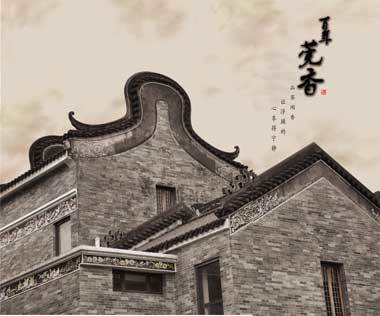
Guanxiang has a history of at least 400 years. Based on this, we have planned the Guanxiang Academy, incorporating more modern agarwood values, incense culture from various countries, and spreading history and knowledge to people, tourists, health entrepreneurs, distribution teams, etc. There is also the latest knowledge guidance from research and development institutions. Let education spread culture, culture drive tourism, and tourism assist in promoting fragrant products. The popularity of fragrant products has further enhanced the central position of Guanxiang in the fragrance industry.
The clumps formed by the secretion of trees and the solidification of wood are black brown in color, solid and heavy, and sink when immersed in water, hence it is called agarwood. Also, because the cultivation of agarwood is most abundant and of the best quality in Dongguan, it is called Guanxiang. Guanxiang, also known as white wood fragrance, daughter fragrance, cliff fragrance, tooth fragrance, and dense fragrance, is officially named soil agarwood.
According to historical records, during the Tang Dynasty, Guanxiang was introduced from abroad. In the Song Dynasty, planting was widespread in various parts of Guangdong, especially in Guanyi. The "Dongguan County Annals" compiled by Chen Botao, a historian in the late Qing Dynasty, records that "Guanxiang became more important than the rest of the world until the Ming Dynasty." Because the soil in Dongguan is particularly suitable for the growth of Guanxiang trees, the quality of the unearthed spices is the best and famous throughout the country, making them excellent tribute products. Guanxiang has been a famous local specialty from the Ming Dynasty to the mid Qing Dynasty.
Guanxiang grows in a soil mixed with yellow mud, sand, and stones. Its leaves resemble boxwood and its seeds resemble forsythia suspensa, which grow on the ground. After planting for four to five years, the tree trunk is chopped off, leaving only a few feet of soil to cover it up. After two to three years of pulling branches, the soil can be opened and the fragrance head can be chiseled. A few slices are chiseled in October each year.
Lao Xiangtou is as hard as stone, and even if it is eroded by rainwater, it is not easy to rot. Some old fragrant heads, due to the light of the sun and moon and the stagnation of frost and dew, produce clumps of fragrant oil, which is called "shengjie". After hundreds of years, some fragrant trees will rot and be rubbed by hand like mud. This will result in shiny, black, hard lumps with a lacquer like texture, which are called ripe knots. The "Notes on Eastern Guangdong" written by Li Tiaoyuan, an inspector in the Qing Dynasty, stated that the value of fragrant knots is even more expensive than gold.
The Guanxiang tree has a long history in Dongguan, and to this day, the Palace Museum in Beijing still preserves the Guanxiang tribute from Dongguan County.
During the Qing Dynasty, daughter incense was a special offering for the emperor. In addition to being used for worshiping gods, it was also used in the palace to drive away mosquitoes and insects.
Guanxiang is still the raw material for many ancient spice products, and it is the fragrance that people burn when they sit quietly in their clothes.
The bark of Guanxiang tree is white and fine in color, with flexible fibers. Since ancient times, it has been a raw material for producing high-quality paper. Paper made from Guanxiang tree is collectively referred to as honey scented paper or fragrant bark paper.
Guanxiang tree also has medicinal value, used for symptoms such as chest distension and tightness, stomach cold, vomiting and hiccup, and shortness of breath.
Liaobu Xiangshi - One of the Four Famous Ancient Cities in Guangdong Province
According to the "Dongguan County Annals," "Guanxiang is suitable for discerning scholars first, and the soil is suitable for being upright. Baishiling, Jijiling, Baihuadong, and Niumianshi are all upright places, but if Wushikeng and Liaobu are not, they will be left behind
Liaobu is also one of the production areas of Guanxiang. Although not known for its fragrance production, it formed the largest Guanxiang distribution center at that time due to its commercial port along the Hanxi River. At that time, most of the exported Dongguan incense was first concentrated in Liaobu and then transported to Tsim Sha Tsui in Kowloon. It was transported by small boats to Guangzhou through a dedicated port for transporting incense, and was exported to Suzhou, Hangzhou, and the capital area at that time, and even to Southeast Asia and Arab countries.
During the Ming and Qing dynasties, there were thirteen specialized streets in Liaobu, one of which was called Yaxiang Street, which was the location of the market in Guanxiang at that time. This name is still in use today.
The Guangdong New Language records the situation where Guanxiang was exported to the north during its heyday, saying: "Guanxiang goes north through the mountains, and although it is of poor quality, it still has a fragrant aroma, which is why it is stained with frost and snow. When Guanxiang was popular, it sold over tens of thousands of gold every year. In the Su Song area, every year on the Mid Autumn Festival, it was burned with ripe yellow flowers and called Xun Yue. The accumulation of Guanxiang in Changmen was exhausted overnight, so many people in Dongguan started with fragrance." It can be imagined that the Guanxiang trade in Liaobu was so prosperous at that time.
More than 400 years ago in the Ming Dynasty, Xiangshi in Liaobu, Dongguan was known as one of the "Four Great Cities of Guangdong" along with Flower Market in Guangzhou, Medicine Market in Luofu, and Zhuhai Market in Hepu (formerly part of Guangdong).
Hong Kong, meaning a port for exporting spices. Nowadays, places such as Sha Tin and Lantau Island in the New Territories of Hong Kong, which belonged to Dongguan in ancient times, also produce Dongguan fragrance. In ancient times, most of the exported Dongguan incense was first transported to Tsim Sha Tsui in Kowloon (now Tsim Sha Tsui in Hong Kong), and then transported by small boats to Shek Pai Wan (now Aberdeen) through a dedicated dock for transporting incense, and then transported by large boats to various places. Due to the fragrant aroma of Guanxiang piled up at the dock, Tsim Sha Tsui was called "Fragrant Wharf" in ancient times, and Shek Pai Wan, a port for transporting spices, was also called "Hong Kong". Later, it was extended to the entire region and collectively referred to as Hong Kong.
Additionally, it is said that Zhongshan is also related to Guanxiang. In ancient times, Zhongshan City was under the jurisdiction of Dongguan and was famous for producing agarwood, hence it was known as Xiangshan. Later renamed as Zhongshan.
The Guanxiang tree slowly spread and was planted in ancient times, as far as present-day Hainan, Guangxi and other places, especially Hainan. Guanxiang has had a profound impact on the local culture and economy since ancient times.
Previous: None
Next: None

Service Hotline