
 Consultation Phone:
0755-82328526
Consultation Phone:
0755-82328526
Consultation Phone:
0755-82328526
Consultation Phone:
0755-82328526


— Industrial Module —
 Customer Service Phone0755-82328526
Email: gdguoyuan888@vip.163.com
Address: 深圳市罗湖区深南东路5002号信兴广场地王商业中心商业大楼4011
Fragrance Product Finance
Author: Admin Source: 华夏香都 Publish Time: 2021-06-01 Views: 1225
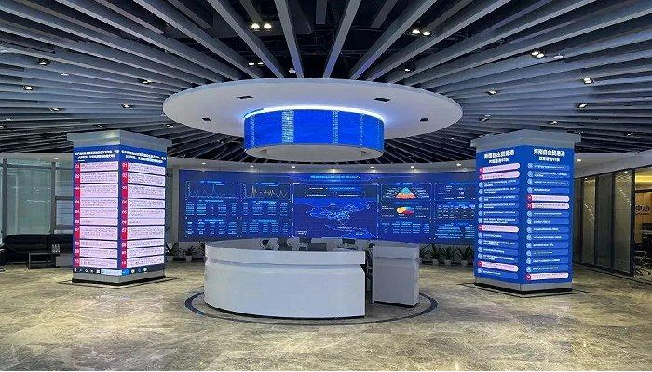
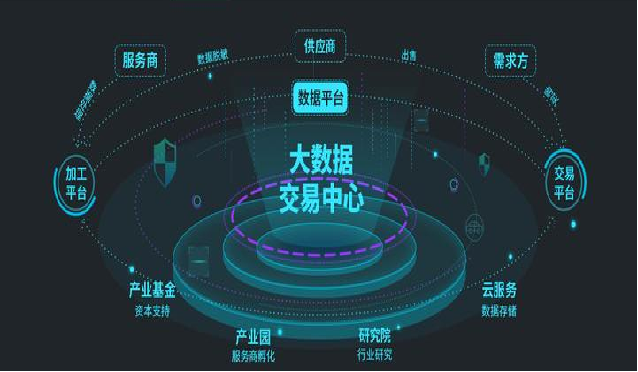
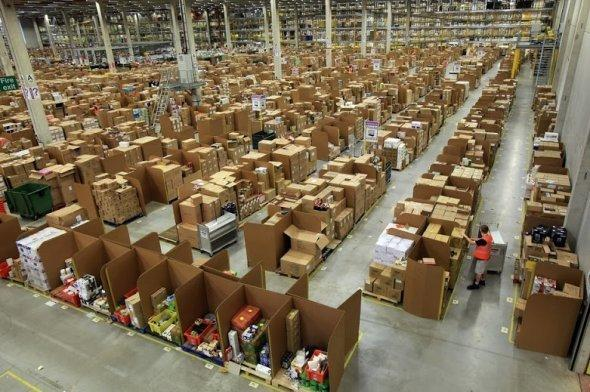
Establish an agarwood futures trading platform to stabilize market price fluctuations, alleviate the capital advance pressure on rural cooperatives, provide transaction guarantees to prevent counterfeit goods, ensure that the agarwood appraisal center eliminates the practice of passing off inferior products as quality ones, and combine with logistics centers to pave the way for the internationalization of agarwood, making agarwood trading faster, safer, and minimizing financial and time wastes in each link.
In the era of digital economy, the free flow of data and information is not only a necessity for the development of the digital economy industry, but also an inevitable result of economic globalization and digital industrialization. In recent years, countries around the world have been actively promoting the development of the digital economy to varying degrees. The digital transformation of traditional industries has become an inevitable trend. Currently, the market for new technology fields is huge. Our country has certain advantages in 5G, 6G, intelligence, blockchain, big data, and other aspects. If we continue to leverage our digital technology advantages, we will embrace tremendous development opportunities.
The pandemic has brought many uncertainties to the global economy, but new opportunities emerge from crises, and new prospects emerge from changes. In the future, China's openness to the outside world will further increase, connecting the international and domestic markets and forming a dual-cycle innovative development pattern. This will also create more development opportunities for cooperation between China and other countries around the world.
Actively building the China International Spice Trading Center in Dongguan is a crucial support for Dongguan to establish itself as the "Spice Capital of China" and enhance its core competitiveness in the development of the spice economy. It is also an urgent need for Dongguan to implement the national economic development strategy and serve the economic transformation and development of Guangdong. Furthermore, it is an inevitable choice for Dongguan to seize the opportunity, capitalize on the momentum, build itself as a gateway city in the Asia-Pacific region, and further enhance its urban competitiveness. For Dongguan, building the China International Spice Trading Center represents a concept of enhancing urban functions and serves as an important carrier for strengthening Dongguan's economic influence and radiation.
II. History of Guanxiang
Dongguan has a long history of planting guanxiang trees. Historical records indicate that they were introduced during the Tang Dynasty and were widely planted across Guangdong during the Song Dynasty, with Dongguan being particularly prominent. In the late Qing Dynasty, the historian Chen Botao compiled the "Dongguan County Gazetteer," which stated: "For guanxiang, one must first consider the suitable soil. The soil in Baishi Ridge, Jichiling, Baihua Cave (now Dalingshan Town), and Niumianshi is considered suitable; however, Wunikeng and Liaobu are inferior." The "Guangdong Gazetteer" records: "Many people in Dongguan made their fortunes from incense," and "when guanxiang was in high demand, the annual sales exceeded tens of thousands of gold." The sandstone red soil of Dalingshan is very suitable for the growth of guanxiang trees, and the trees produced are mostly of high quality. Therefore, after the Ming Dynasty, most villages relied on planting, making, and selling incense as their main source of income. Among them, places with incense trees as their place names include: Xiangziyuan in Jichiling Village, Baiyaxiang in Jinju, and Xiangjiao in Baihua Cave Village.
From the Ming Dynasty to the mid Qing Dynasty, Guanxiang was a major commodity in Dongguan, especially in Liaobu, and an important economic pillar of Dongguan. During the Ming and Qing dynasties, Liaobu Xiangshi, along with Guangzhou Flower Market, Luofu Medicine Market, and Lianzhou Zhuhai Market, were collectively known as the "Four Major Cities of Guangdong". The exported Guanxiang was first transported to Tsim Sha Tsui, Kowloon (now Tsim Sha Tsui, Hong Kong), and then transported by small boats to Shek Pai Wan (now Aberdeen, Hong Kong) for concentration. It was then exported to mainland China, Southeast Asia, and Arab countries. Due to the storage of Guanxiang at the dock and the fragrance drifting in the harbor, Tsim Sha Tsui was formerly known as "Fragrant Wharf", and "Hong Kong" originated from it.
For a long time, the fragrance of Dongguan has been irreplaceable. Since its introduction during the Tang Dynasty, Guanxiang had become an essential tribute to the court during the Ming Dynasty. Even in today's highly developed daily chemical technology, it is still impossible to replicate the fragrance of Dongguan through artificial synthesis. Therefore, Guanxiang is an essential ingredient in the preparation of world-class perfume, essential oil and other products.
The wonderful use of Guanxiang is not only the "tea fragrance" in the memory of Maopijiang, but also adds a special flavor to perfume; She is still a precious traditional Chinese medicine and a top-quality product used in folk customs to smoke incense and ward off evil spirits. As a precious traditional Chinese medicine, Guanxiang has a long history of being taken orally as medicine. During the Ming and Qing dynasties, when the ancestors of Guangdong went abroad to make a living, they would always carry two treasures with them: one was a fragrant ash bag filled with soil from their hometown, and the other was a statue carved with Dongguan fragrance. In ancient times, the medical and health conditions were extremely poor, and people were easily unable to adapt to the environment in a foreign land. If people from Guangdong experience physical discomfort, they pray to the gods for permission to scrape a small amount of Guanxiang from behind the statue and swallow it with water. This not only relieves the pain of homesickness, but also alleviates the pain of the skin, greatly relieving both mental and physical pain. The wonderful use of Guanxiang, in the hands of Guangdong people, has been fully utilized.
3、 Overall Concept for Establishing China International Spice Trading Center
Integrate existing trading markets, promote resource sharing, integrate electronic trading, logistics information, port clearance, financial and shipping comprehensive services, portal websites, data exchange, standardization, safety production, administrative approval and other system construction, promote the aggregation of commercial flow, logistics, information flow and capital flow, build a unified electronic platform for spice trading, form a strong scale advantage, create an internationally renowned spice trading brand "Dongguan Brand", and ultimately make Dongguan an important service center for spice trading, pricing, settlement and information with significant influence in China and even the world.
The construction of the China International Spice Trading Center trading platform was established by Guangdong Xiangdu Cultural Industry Co., Ltd., with Guangdong Xiangdu Cultural Industry Co., Ltd. as the initiating unit, in conjunction with large spice groups at home and abroad, to jointly establish a comprehensive spice trading platform. The platform integrates electronic transactions, logistics information, port clearance, comprehensive financial and shipping services, portal websites, data exchange, standardization, and security systems, and has five major functions including spice trading, public information, port clearance, financial support, and shipping integration.
Establish the Spice Trading Center Trading Platform Management Committee. The management committee is mainly responsible for the construction of the China International Spice Center trading platform, doing a good job in the supervision, management, guidance, coordination, and service of spice trading, coordinating and solving important problems encountered in the platform construction, promoting the standardized and sustainable development of the city's spice trading market, and enhancing the credibility and standardization of the trading market.
Transaction method:
The trading platform of China International Spice Trading Center adopts multiple trading methods. The platform not only allows investors to freely trade in the spice futures contract mode in the trading market before the delivery period, but also facilitates the transfer of spice forest rights, forest product trading, and fragrant flower and herb seedling trading. Through seller listing, buyer listing, online bidding, online auction, two-way bidding, matching trading (call auction), online bidding, and online special sessions, it helps merchants and customers achieve online and offline transactions, as well as domestic and foreign trade transactions.
Type 1: Seller Listing
Seller listing refers to a trading model in which the seller enters the detailed information of their own or future owned goods into the trading system in this market, confirms and issues a listing offer, and the buyer queries the relevant listing offer content through the trading system, and then delists and signs an electronic trading contract.
Second type: buyer listing
Buyer listing refers to a trading mode in which the buyer enters the detailed information of the goods they need to order into the trading system in this market, confirms and issues a listing offer, and the seller queries the relevant listing offer content through the trading system and delists to sign an electronic trading contract.
The third type: online bidding
Online bidding refers to a trading model in which a certain supplier (seller) uses a certain quantity of goods as the subject matter, issues a bidding offer through the market trading system, and the buyer publicly bids in an upward bidding manner. Finally, one or more bids that meet the seller's sales quantity are sorted in descending order, and the top ranked buyer wins the bid for the subject matter and signs an electronic contract.
The fourth type: online bidding
Online bidding refers to a trading model in which a purchaser (buyer) places a demand for a certain quantity of goods as the subject matter, issues a bidding offer through the market trading system, and the seller publicly bids in a downward bidding manner. Finally, one or more bids that meet the buyer's order quantity are sorted in descending order, and the top seller wins the bid and signs an electronic contract.
Fifth type: Bidirectional bidding
Bidirectional bidding refers to a trading model in which traders choose specific trading products and delivery dates within the scope of the market to conduct bidding transactions on the direction, quantity, and price of buying and selling, and sign electronic contracts, under the condition that all other contract terms except for the order price, order quantity, spice producer, and delivery location are determined or agreed upon by both parties
Sixth type: Matchmaking transaction (call auction)
Call auction refers to a trading model in which traders choose specific trading products within the scope of the market to conduct segmented bidding transactions in terms of buying and selling direction, quantity, and price, and sign electronic contracts, under the condition that all contract terms except for the order price and order quantity are determined or agreed upon by both buyers and sellers, within the scope of trading products specified in this market
Seventh type: Online bidding
Online bidding refers to a trading model in which purchasers complete large-scale bidding and procurement of one or more goods through the trading system of this market, and sign electronic trading contracts for online bidding
Eighth type: Online session
The online specialized trading mode is a special session set up by this market to better serve the market and traders, based on the needs of market development, traders' demands, and other situations, specifically for a trader, a traded commodity, or a region, to adapt to and meet the special needs of the market
4、 Planning for Establishing the China International Spice Trading Center
1. Improve and develop multiple trading zones (supported by the physical market)
Taking "expanding and strengthening the existing market, optimizing and developing trading varieties" as the overall requirement, actively improving and developing multiple trading zones. On the basis of expanding and strengthening the existing specialized commodity trading market, we will focus on building a number of national spice trading market clusters, striving to form several influential spice trading market areas in the Pearl River Delta, China, and even globally, laying a solid market foundation for the construction of the China International Spice Trading Center in the Greater Bay Area.
At the same time, with a huge market foundation, customized planting can be implemented to achieve precise poverty alleviation and help farmers escape poverty and strive for a moderately prosperous society, thus forming a good domestic and foreign dual circular economy.
2. Spice Display and Sales Center
Integrating spice culture and sales services, it systematically displays the history, raw materials, processing techniques, etc. of spices, and also has wholesale and retail functions.
3. Plan to construct a batch of storage and distribution bases
We should make overall planning to construct a batch of material storage and transportation bases, bulk cargo storage and transportation bases, and standard delivery warehouses. We should further improve supporting facilities and enhance the capacity of transfer storage and transportation. We should actively seek to leverage the innovative policy advantages of bonded areas and bonded port areas, and actively develop international spice trade and logistics centers.
4. Cultivate and introduce a group of traders and logistics enterprises
Vigorously cultivate and introduce a group of spice traders, trading platform operators with core competitiveness, and a group of modern logistics enterprises such as transit, transportation, and distribution. Encourage and support relevant enterprises to go global and actively participate in international trade competition in the spice market. Encourage and support the merger and expansion of the Greater Bay Area spice product trading market nationwide, establish branch offices, achieve development and growth, and provide financial and tax support. Guide enterprises to focus on improving their operational capabilities in the field of spices, striving to upgrade from simple traders and traditional producers to operators with an international perspective, thereby forming a group of first-class traders and producers with flexible mechanisms, efficient decision-making, strong market resource allocation capabilities, and sensitive price judgments, and enhancing the competitiveness of spice enterprises in the Greater Bay Area in the international spice trade market.
5. Planning and constructing an education and training center
The construction of the China International Spice Trading Center requires a large number of professional and versatile high-level talents to engage in high-end services such as product market prospect analysis, market trading tool innovation, market index product research and development, and market promotion. To this end, it is necessary to strengthen the training and introduction of trading professionals, and to quickly introduce a group of high-quality professionals in commodity trading, delivery and futures, finance, shipping, logistics and other fields. To include professionals in the spice trading and related supporting industries in the national talent introduction catalog, relevant departments and units should also strengthen cooperation with domestic and foreign prestigious universities and professional research institutions, implement professional training, targeted training, and talent introduction, and accelerate the formation of a high-quality, experienced, and innovative team of spice trading professionals.
Accurately positioning the spice industry cluster, leveraging the research advantages of relevant universities and R&D institutions, developing innovative and internationally competitive new products around the chemical synthesis, process research and development, small-scale and pilot scale testing, and industrialization of spices, and cultivating technical and related talents in the spice industry. Build the Greater Bay Area into an international hub for spice industry technology and talent.
6. Planning and constructing a transaction settlement center
Establish a unified registration and settlement system, with the settlement center responsible for registration and settlement business, while the trading venue focuses on the construction and maintenance of the trading platform. Reducing the risks brought by the existing transaction settlement system is conducive to promoting the standardized development of the entire industry. Systematically supervise the relevant business of trading venues, and through this deep regulatory model, fundamentally prevent various violations, enhance industry credibility, and improve the spice settlement capabilities of Chinese financial institutions in the world financial market.
Previous: None
Next: None

Service Hotline